What an airport does to paper
Paper at an airport side business has a deadline attached. A manifest has to be in the folder before the truck leaves. A hire agreement has to be signed at the counter while the customer is standing there with the keys in sight. A maintenance record has to be legible in five years, not just today.
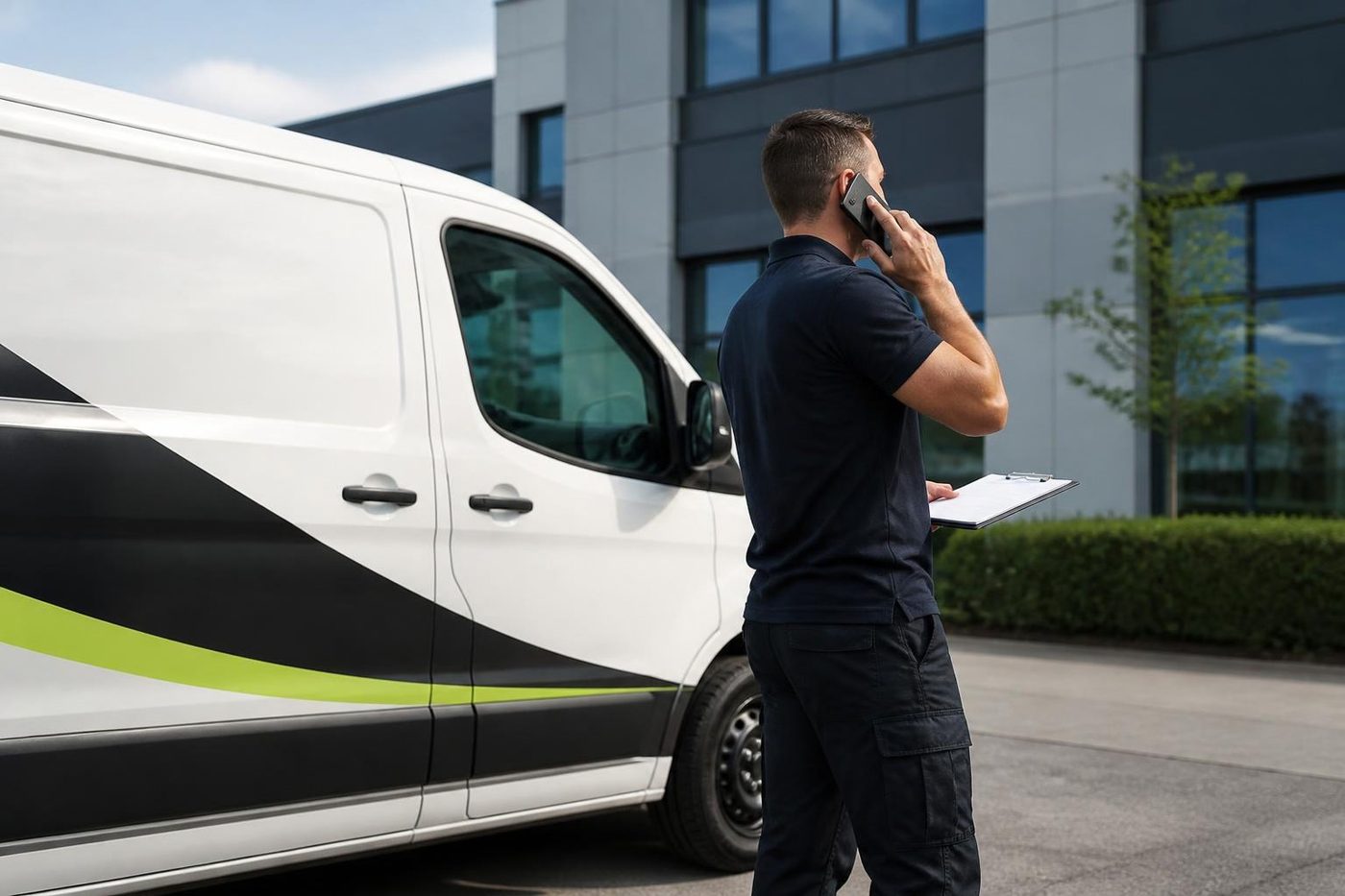
That changes what we think about on a call. A fault that would be a nuisance in an accountant's office is a real problem here, so the first thing we ask is what the machine has to produce next and by when. The answer decides whether we plan a quick visit or a proper look at the cause.
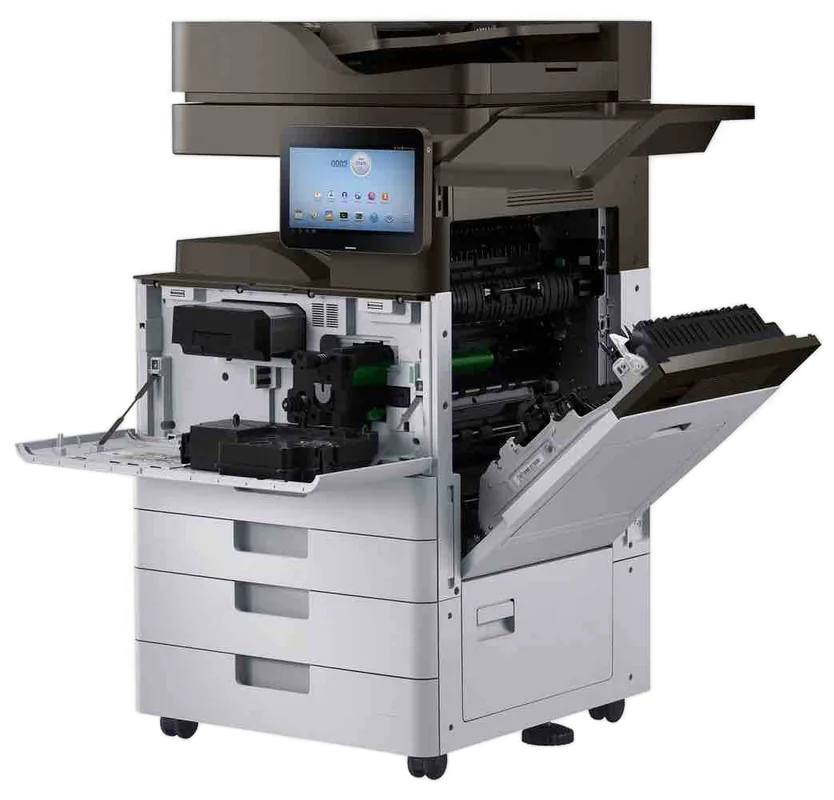
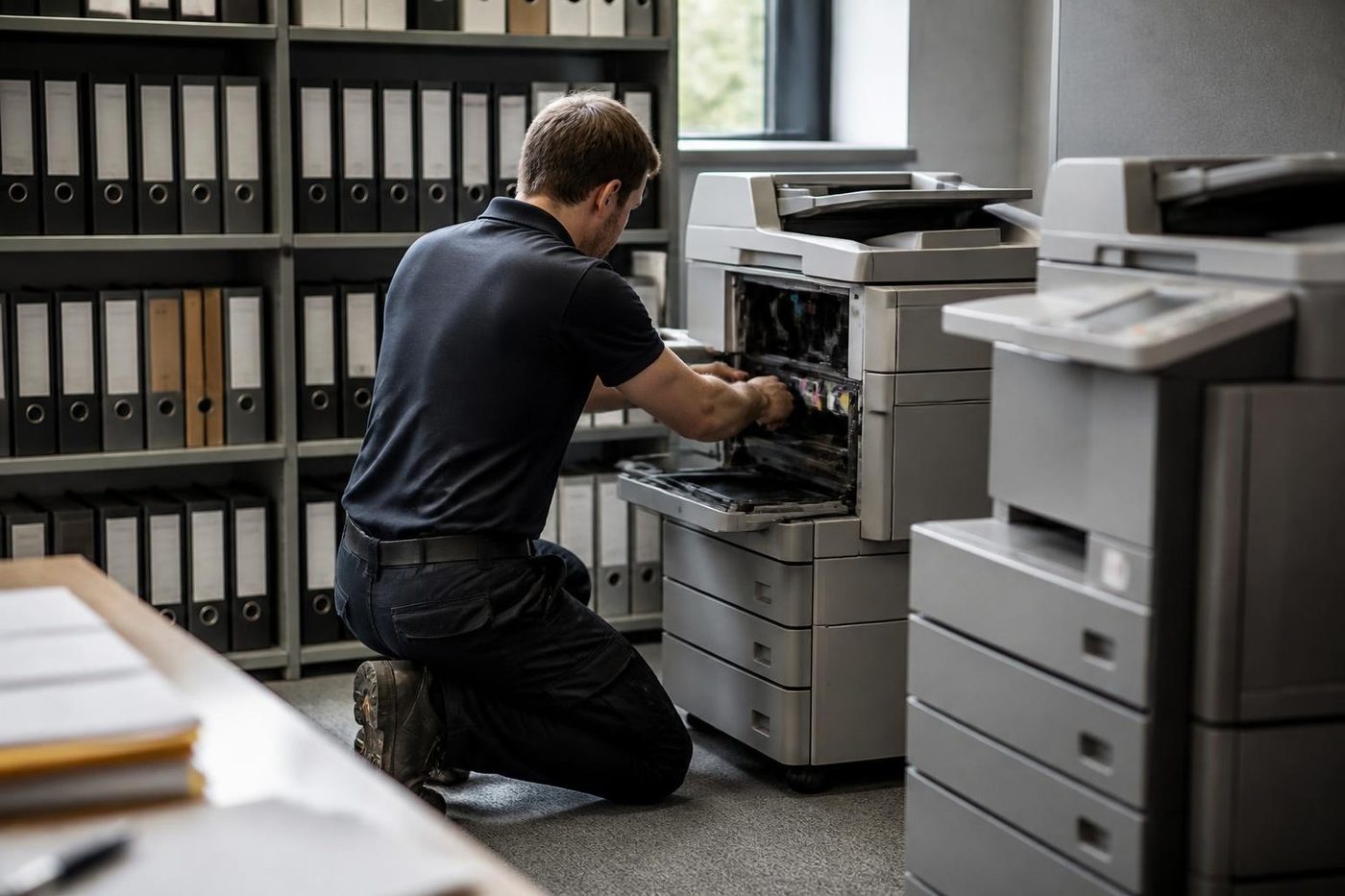
The machines themselves are ordinary. A Toshiba e-STUDIO or a Kyocera TASKalfa in a back office, a Canon imageRUNNER ADVANCE behind a service counter, a Brother or HP laser at each desk, and a Zebra thermal printer on the dispatch bench. We service all of them where they stand.
Marcoola Beach and the strip behind it
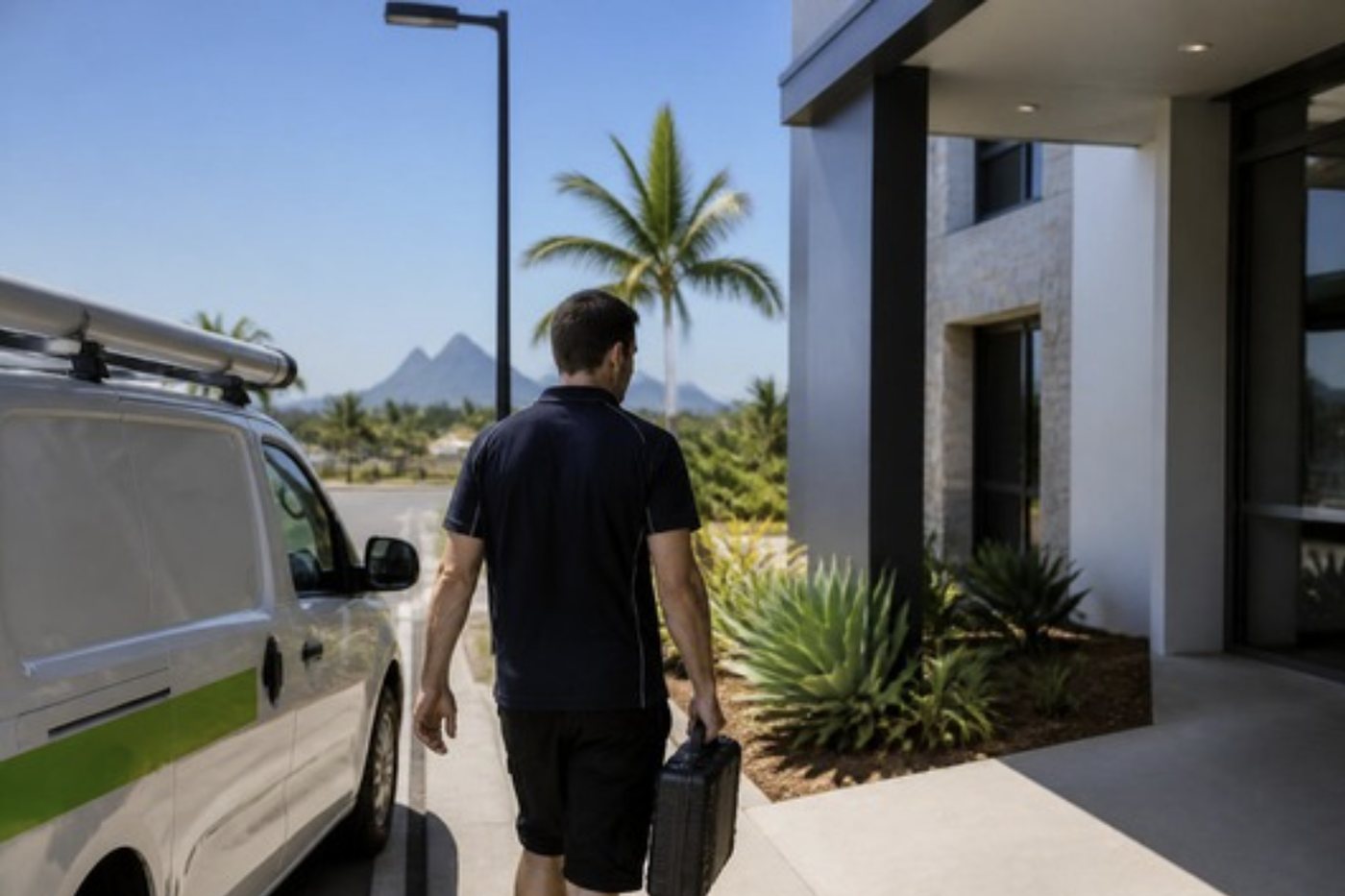
Marcoola sits on the coast road between Mudjimba and Coolum, with the beach on one side and the airport on the other. Houses, a small shopping strip, holiday accommodation and a scatter of home offices. A fair share of the calls from the beach side are salt related: paper that curls because the room is damp, a connector that has gone green behind the machine.
We tell people the same plain things each time. Keep paper in its wrapper until it goes in the tray. Do not park the machine in the path of the sea breeze from an open door. If the printer has been off for weeks over a holiday, run a test page before the first real job.
Counters, desks and the shared machine
A hire counter or service desk shares one machine between six or seven people on different shifts, and every one of them has changed a setting at some point. Somebody picked A3 and never put it back. Somebody turned on a user code. Somebody set the scan destination to their own folder.
Then the machine looks broken. Nothing is broken, it is just full of other people's choices.
We sort those out during the visit and show the next person on shift how to see what is selected. It costs ten minutes and saves a callout.
Label and docket printers
Freight and courier desks live on thermal printers. A thermal printer has no toner and no ink. A print head heats the label stock or a ribbon, and a rubber platen roller presses it flat. Labels that come out pale, with a white stripe down them, or with barcodes the scanner refuses to read are usually one of three things: a dirty head, a worn platen roller, or heat and speed settings that no longer suit the stock.
A scanner that rejects a barcode is a business problem, not just a print quality one, so we test with the scanner and not just by eye. Label printers that wander off the network after a router change are another common one. The fix is a fixed address, not a new printer.
Before you ring: four quick looks
- Read the panel message word for word, or take a photo of it. The exact wording tells us more than the colour of the light.
- Note whether the fault is on every job or only from one tray or one computer.
- Think back to anything that changed: a power cut, a new router, a staff password reset, a move of the machine.
- Say what the machine has to print next and when, so we can put the right urgency on it.
Access, induction and who meets us
Some airport side premises have rules about who can come in and when. We do not assume anything. When you ring we ask who meets the technician, whether a sign in or induction is needed, and what time suits. If we are not let in, we do not go in.
That also applies to the neighbouring trade units, where the roller door might be shut for the afternoon, and to the car hire yards, where the office is a demountable behind the cars.
Mudjimba, Pacific Paradise and Twin Waters
The villages either side of Marcoola bring a different kind of caller. Property managers, a couple of small medical rooms, boat and fishing businesses near the river mouth, accommodation offices, people working from a spare bedroom. Most of the machines are compact A4 multifunctions, with a copier or two in the larger offices.
The faults follow the machine's age. Printers over five years old tend to need rollers and a clean. Newer ones tend to need network settings corrected after someone changed provider. A few small premises run two or three machines, and when they do we like to look at all of them in the one visit so the invoice is one job and not three.
Records that have to stay readable
A page that rubs off on your thumb has a fuser problem. The fuser melts toner into the paper, and when it runs cool or the roller is worn, the toner sits on the surface. On a maintenance record or a signed agreement that is not acceptable.
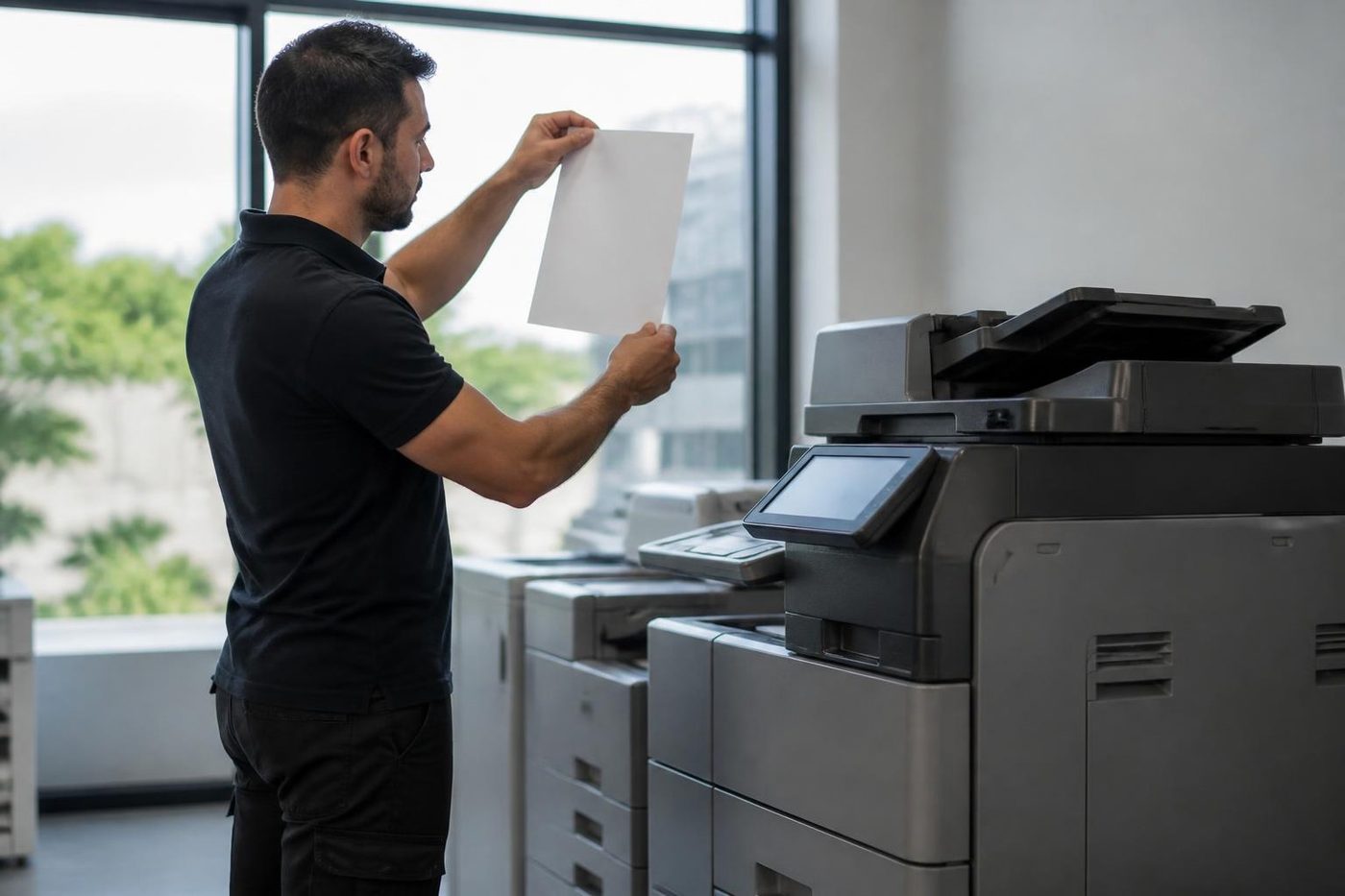
Faint stripes down the page usually come from the drum or the developer, and a thin dark line that repeats at the same spacing points to a roller or the drum surface. We check the page, not just the machine, and we say whether the cause is wear, settings or the wrong paper.
When the machine is not worth another repair
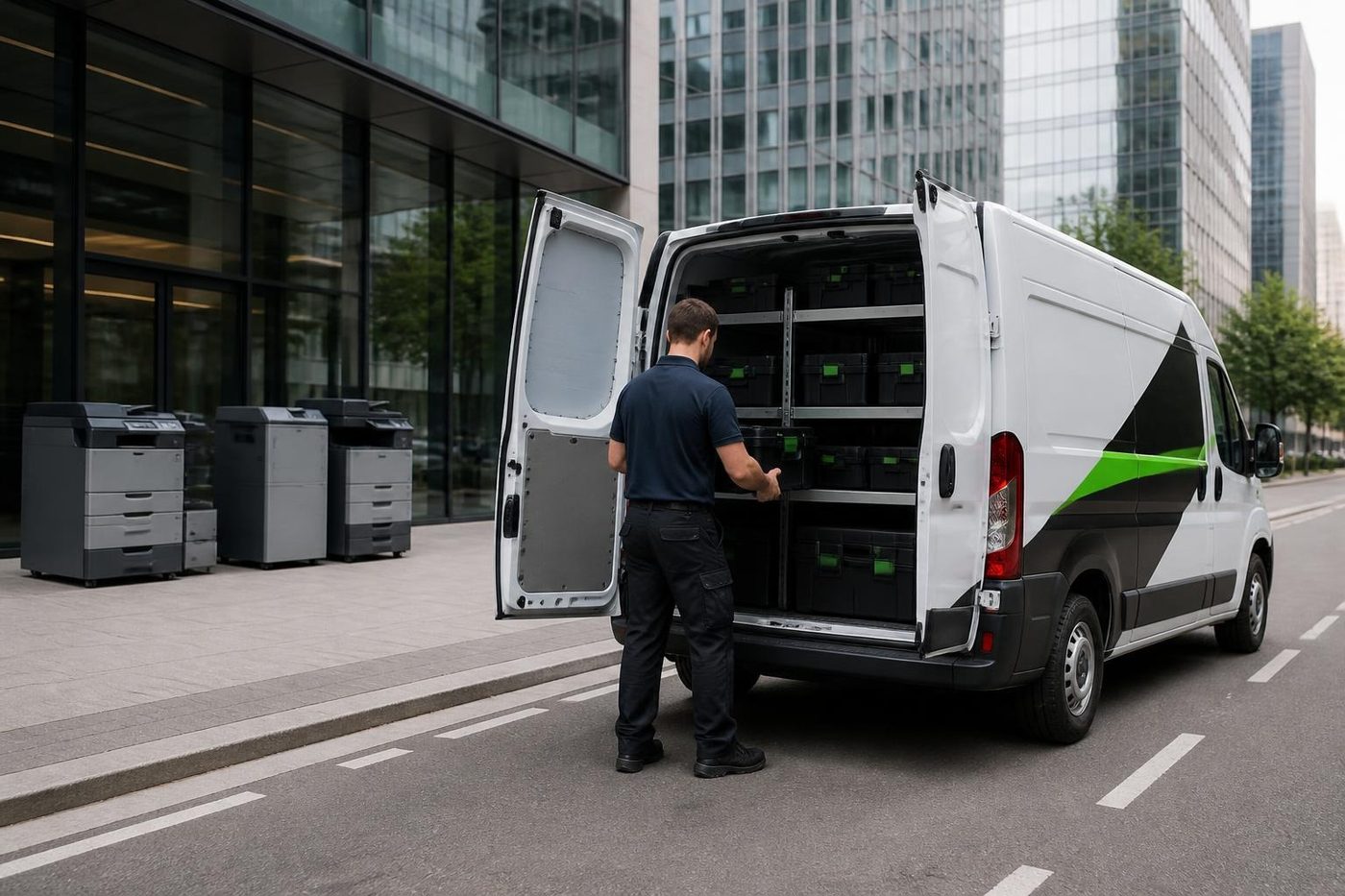
Some copiers have done their time. If the repair is a poor spend we say so and talk about what would suit the business, new or second hand. We deliver and set up the replacement, we can take the old one, and the machines we sell are warranted.
If it is a short project or a season, rental is an option, and we can look at that with you.
Toner, drums and the question of coverage
Hire counters and freight desks tend to print a lot of pages with very little ink on them: forms, agreements, a line of text and a signature box. That is easy on a machine. A printer that does the same ten thousand lightly covered pages a month will outlast one that prints dense graphics all day.
The reverse is a flight school or training business printing manuals, colour charts and handouts in bulk. Those are heavier on toner and heavier on the fuser, and they run into the maintenance kit sooner. When a machine tells you a kit is due, it is counting pages, not judging the machine. We would rather change the parts on a calm morning than after a breakdown.
Second machine, same fault
A thing we see in small offices around here is two identical printers beside each other and one of them is always the favourite. It carries the load, wears out first, and the other sits idle and goes stiff. Swapping their jobs every few months evens the wear and keeps the quiet one from seizing up.
It sounds trivial. It saves more money than most things we could sell you.
Cafes and kitchens near the terminal
The cafes and food counters print dockets, rosters and supplier orders, and the printer lives near steam, grease and flour. A kitchen printer needs a wipe more often than any other machine we visit. A thermal receipt printer with a greasy platen slips and prints skewed, and a laser near a fryer picks up an oily film on the rollers that makes paper slide.
The cure is a clean with the right cloth and a better spot, and the visit takes minutes.
Drums and daylight
A drum does not forgive a sunny bench
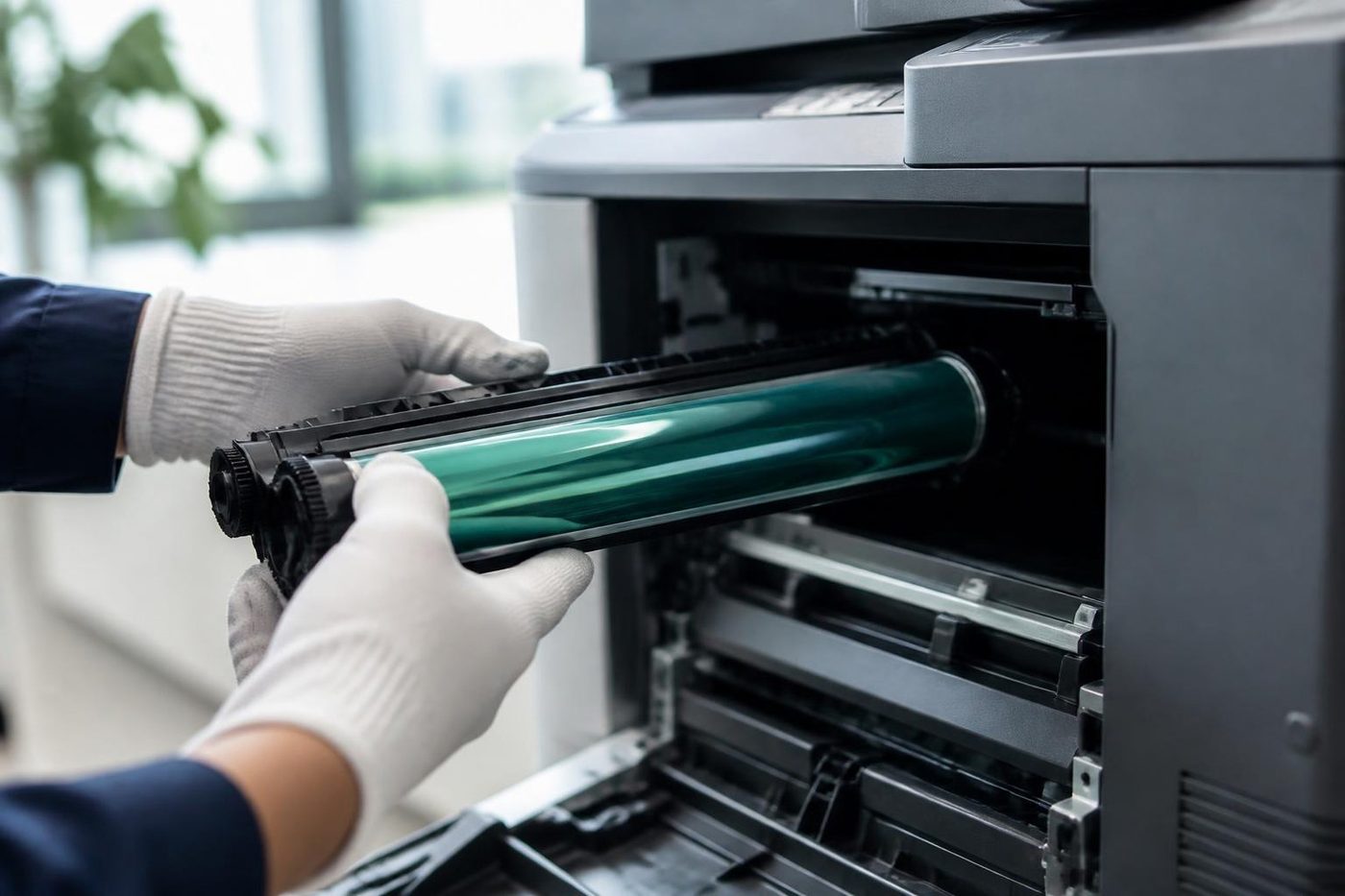
The drum is coated with something that reacts to light. Leave one on a bench by a window at a Buderim office while someone hunts for a screwdriver and it can come back marked for good, the same small spot down every page. People notice a week later and blame the toner. Ours stay wrapped until the second they go in, and nobody puts a finger on the surface.
We have no brand to push, so nobody here gains by selling you a drum you did not need. If the drum is fine we say so and look somewhere else.
- Wrapped until fitted. Drums stay out of the light.
- No fingers. The surface is never touched.
- Cause first. Streaks and spots get traced before a part is ordered.
More for Sunshine Coast offices
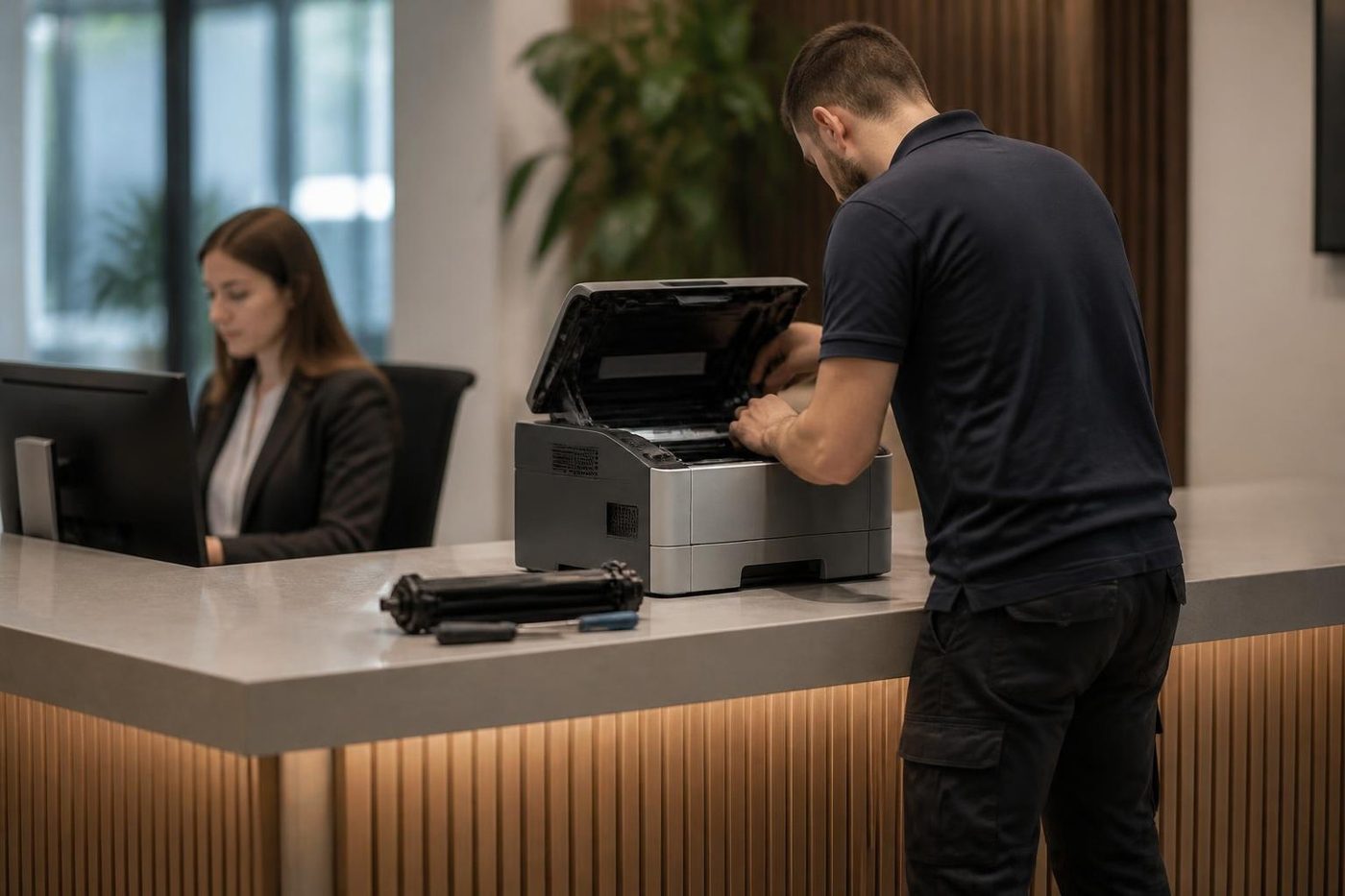 Commercial printer repairsCommercial laser printers, label printers and fleets repaired on site.
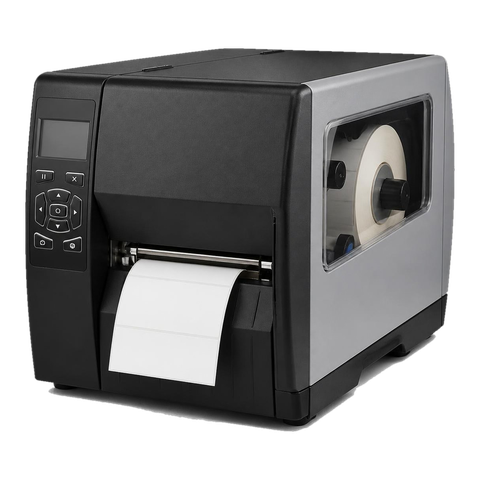 Zebra repairsZebra desktop, industrial, mobile and card printers repaired on site.
 Coolum industrialWorkshops, builders, joiners and trade units around Coolum, plus the offices in front of them.
 Coolum and Peregian BeachPrinter service and copier repairs along David Low Way for shops, holiday managers, practices and trades.
 Printer offline and network faultsPrinter showing offline, or reachable from some computers only.Bli Bli and Pacific ParadiseBli Bli, Maroochy River, Pacific Paradise and the home offices and trades between them.
 Photocopier hire, rental and leaseFour ways to pay for a commercial copier, set out in plain words, with what to ask before you sign.
Buy, sell and lease
Buy, sell and lease commercial copiers on the Sunshine Coast
We also sell new and second hand commercial copiers and buy used ones. Same team, same technicians.
Around the coast with the van
What people ask when they ring
Can you come to the airport precinct?
Yes, once access is arranged. When you phone we ask who meets the technician and whether any induction or sign in is needed. We do not enter any site without that being sorted first.
My label printer prints pale. What should I check?
Make sure the stock and ribbon are the right pair for the printer. A pale label can also mean a dirty print head or a worn platen roller. Clean the head with the wipe your supplier recommends, and ring if the pale stripe stays.
The barcode will not scan from our printed label. Is that a printer fault?
Often. Faint or broken bars come from a dirty head, a worn roller, or heat and speed settings that do not suit the label. We test the printed barcode with a scanner, not just by eye.
Do you fix machines at Mudjimba and Pacific Paradise as well?
Yes. Those suburbs are on the same run as Marcoola and we group nearby machines into a single visit where we can.
How fast can someone get here?
Same day service is available but it depends on the day. Ring early, say what is wrong, and we tell you what is possible. If the lines are busy the call is logged and returned.
Our copier reboots by itself during storms. Why?
Power surges are a common cause on the coast. A reboot that leaves a service code behind should be looked at, because a surge can damage a power board over time. A surge protector or a UPS on the circuit helps.
How do you set the price?
On the phone, before anyone is booked. If the job turns out different when the technician is there, we stop and tell you first.
If the same fault comes back, what happens?
We fix it again, and there is no charge for that.
Are you linked to Toshiba, Canon or the other makers?
No. We are an independent service business, so the advice is about your machine and not about a brand.