Three kinds of message on a copier panel
Prompts first. Add paper, replace toner, close the side door, empty the waste bottle. These come in plain words and go away once you do the thing.
Jam messages. A picture or a number shows where the sheet has stopped, and it clears when the sheet is out.
Service codes. A letter or two followed by digits, often alongside the words Call service or Call for service. The machine has noticed a fault it will not work around and it is asking for a technician.
Only the third kind is a code in the sense most people mean. The first two are conversation.
Different makers, different first letters
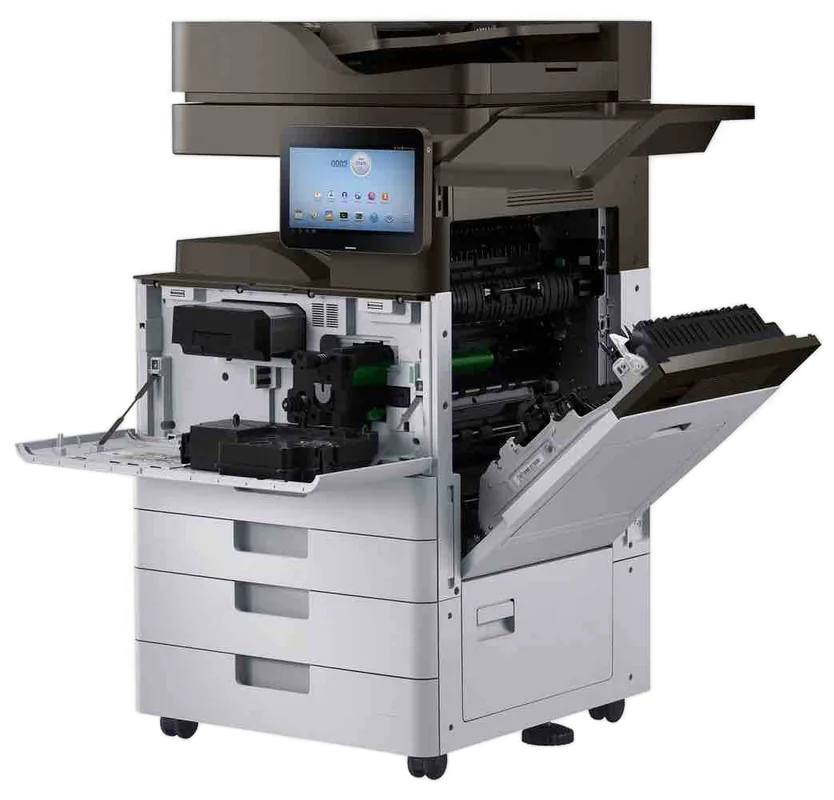
Toshiba and Kyocera both show a C followed by digits for a service call. HP LaserJet messages open with a pair of digits, sometimes with a point and more after it. Ricoh machines show an SC number. Canon imageRUNNER machines show an E followed by digits. Konica Minolta bizhub panels show a malfunction code that begins with a C.
One number can mean quite different things between makes, and even between generations from the same maker. A web search on the digits alone often returns advice written for another machine. Pair the code with the model name every time.
For more detail we have separate pages on Toshiba e-STUDIO, HP LaserJet and Kyocera TASKalfa.
Writing it down properly
Copy the code exactly as shown, letters, points and dashes included. Then add the model name, usually on a badge near the top of the front.
Note the timing. Did the code come the second you switched on, or after the machine had warmed up for a minute? Did it come in the middle of a job? Timing is often what separates one cause from another within the same family, particularly for heating faults.
If there is a smell of heat or a burnt odour, say so. Do not keep switching on to see what happens.
What you can try, once
Power it down with the power key, count to sixty, and power up. Once, not repeatedly.
Should the code come back and the machine sits on a power board or surge protector, move the plug to a wall socket. Low supply upsets heating parts, and a shared board makes that worse.
Back again? Leave it off and ring us. More attempts gain nothing and may make a small fault worse.
Resist a reset sequence found online. Some of them clear a code without addressing why it was set, and some of them wipe settings your IT provider configured.
Why heating faults dominate
The fuser has the toughest life in the machine. It stays hot all day, with a heater, sensors and a safety cut out. Among the service codes we see, the heating family turns up most. Timing helps narrow it: a code the moment you switch on usually means a sensor, a connector or a badly seated unit, and one that arrives after about a minute often means the temperature never climbed.
Other families cover motors, the laser unit, high voltage supplies, finishers and the controller board. We do not claim a meaning we have not confirmed on your model. A code we have not met on your model gets named as such, and we check it on the machine itself.
Codes that mean paperwork, not repair
A maintenance due message means a counter has reached its threshold. That is a prompt about wear parts and not a fault. Left for months it can turn a routine visit into a repair, so ring when it first appears and pick a time that suits the office.
Account and sign in messages, an invalid department code for example, come down to settings. A fault code that shows up after an IT change, new firmware or a new device on the network deserves a mention too, as the cause may be outside the machine.
Coast offices and power
Storm season in the hinterland brings surges and short outages, and a copier that restarts after one often throws a service code on waking. A proper shutdown and restart clears some. In others a power supply or a board has taken a hit, and we find out which before anything gets ordered.
A surge protector costs little. Switching the machine off at the wall in a thunderstorm protects it better. Offices at Kunda Park and Warana running machines overnight, with compressors starting up next door, get brownouts more than a quiet street does, and the code showing at six in the morning can simply be that.
Reading a code the way we do on the phone
When someone reads us a code we ask three things in a fixed order. The model, because the table belongs to the model. The timing, because it splits a family. And what changed, because codes after a storm, a move, a toner change or a firmware update tell a different story from codes that arrived on a quiet Wednesday.
Then we say what the area probably is, what we would expect to carry, and what the price is likely to be, and the person on the phone decides.
A good reader of codes also knows when not to trust one. A single occurrence after a power dip might never come back. The same code three days running is a repair. We look at the history in the machine before deciding which it is.
Fleet machines and the office with four of them
A business that runs several copiers, a council depot, a clinic group or a school with machines in each wing, tends to get the same code on more than one machine at roughly the same time. When that happens the cause is often the supply, a shared firmware version or a shared consumable, and we would rather hear about all four than fix one and leave the rest to repeat it.
What to do while you wait
Keep the other machines in the office working. Move the job to another printer on the same network if there is one, and mark the faulty machine with a note so the next person does not spend ten minutes finding out for themselves.
If a code appears on the one machine that serves the front desk of a clinic or a school office, say so when you ring. We do not promise a time, but we keep a note of where the pressure is.
What happens on a visit
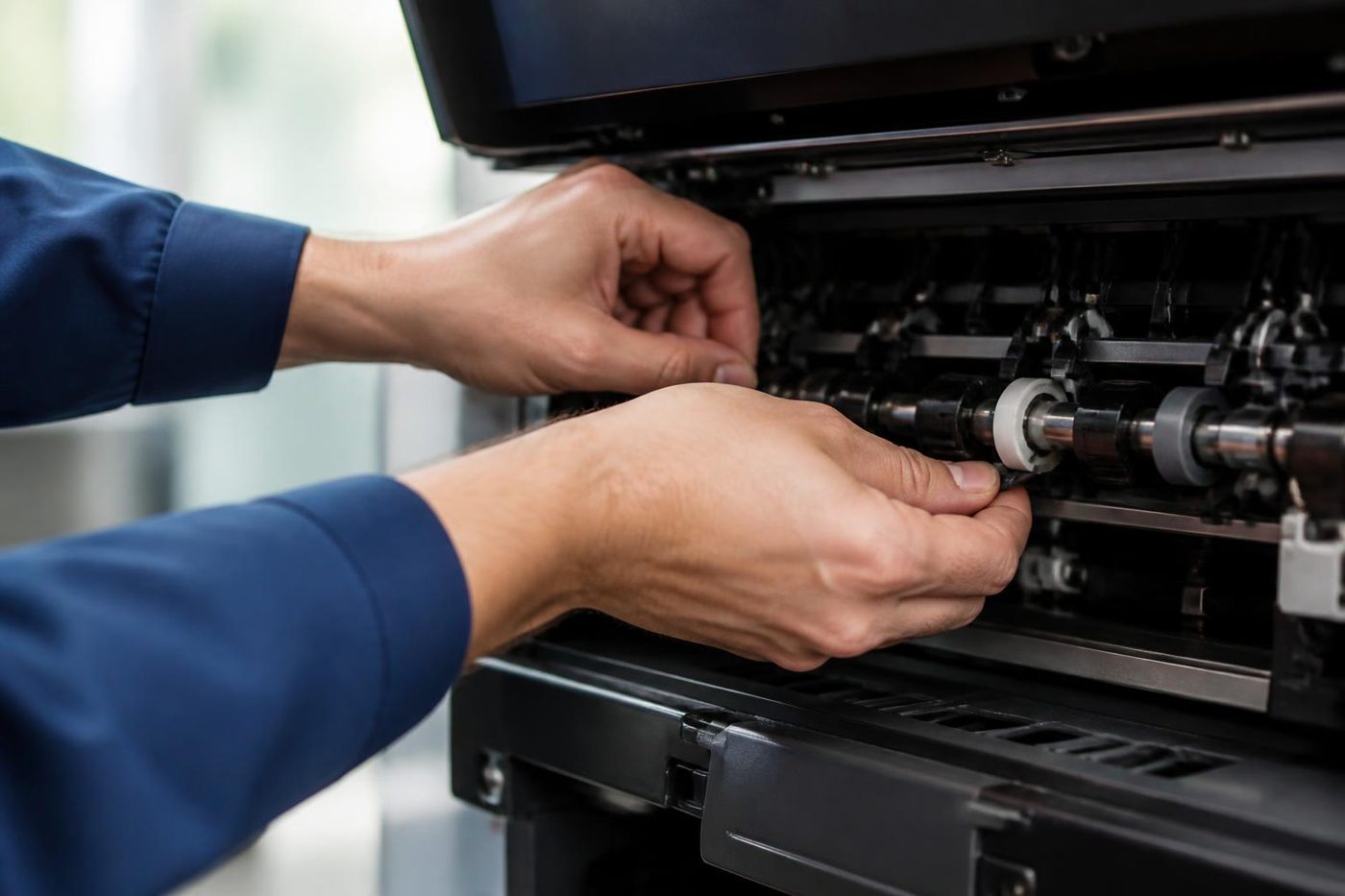
First we read the history stored in the machine, to see if this code is a one off or one of several. After that we work through the area the code names. For a heating code that means checking sensors, heater, thermostat and connectors before a part is fitted. Counters are reset for any wear part replaced, and we finish with copy, print and scan tests, plus the finisher where there is one.
The people on the job hold the training and certification, and 98% of repairs are completed on the first visit. A returning fault is fixed again without a charge. No maker owns us: we are an independent service business.
Damp and salt
The coast does odd things to paper and metal
Salt air and humidity also get into connectors and boards near the water. A green connector pin can look exactly like a failing controller. We tell you what we see, and what to move or keep dry.
Sometimes the answer is a new roller. Sometimes it is a cupboard shelf. We would rather say which.
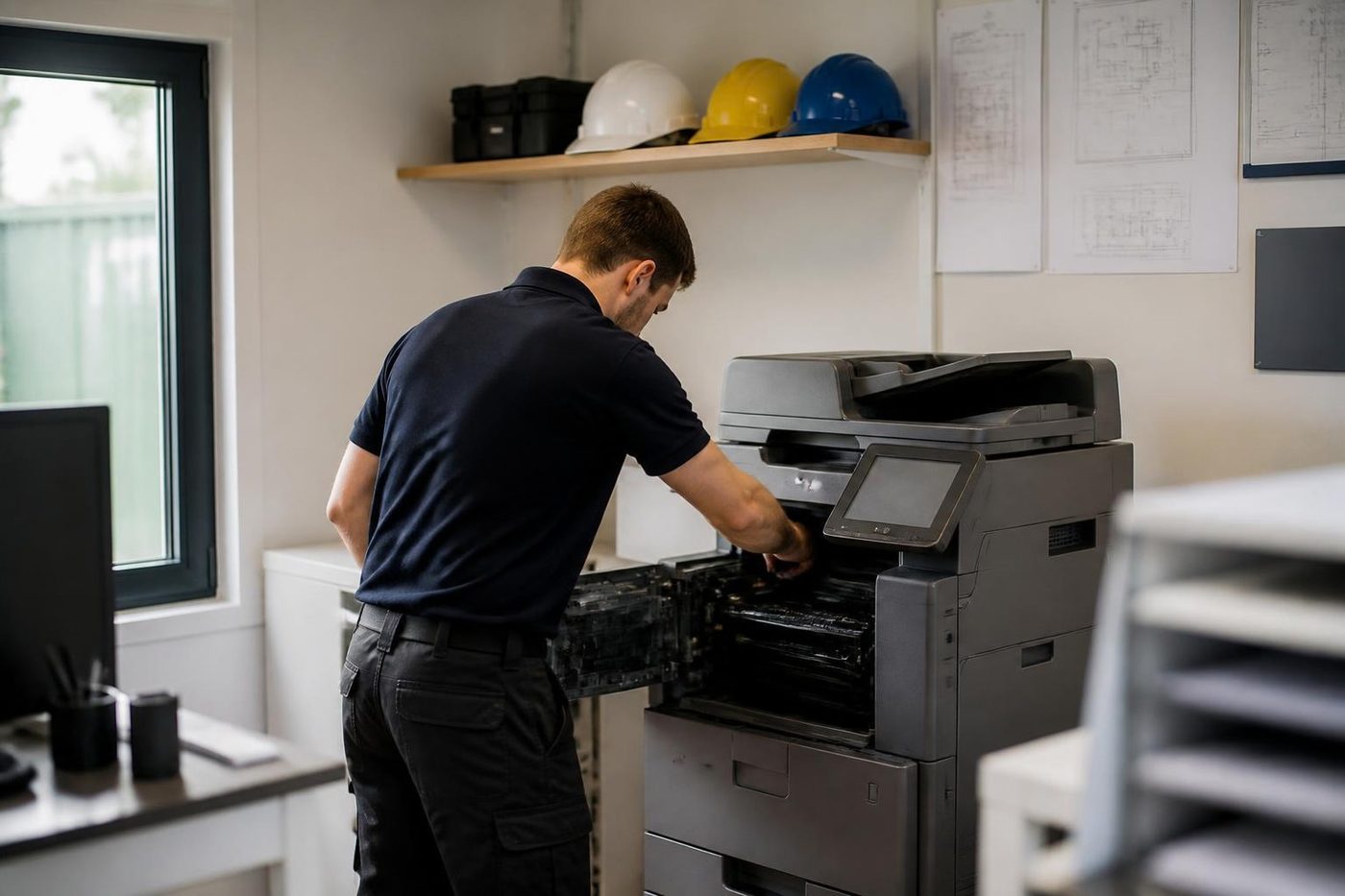
- Check the paper. Wrapped, off the floor, out of the sun.
- Look at the room. Damp, dust and salt all count.
- Fix the cause. Parts only when they are the problem.
More for Sunshine Coast offices
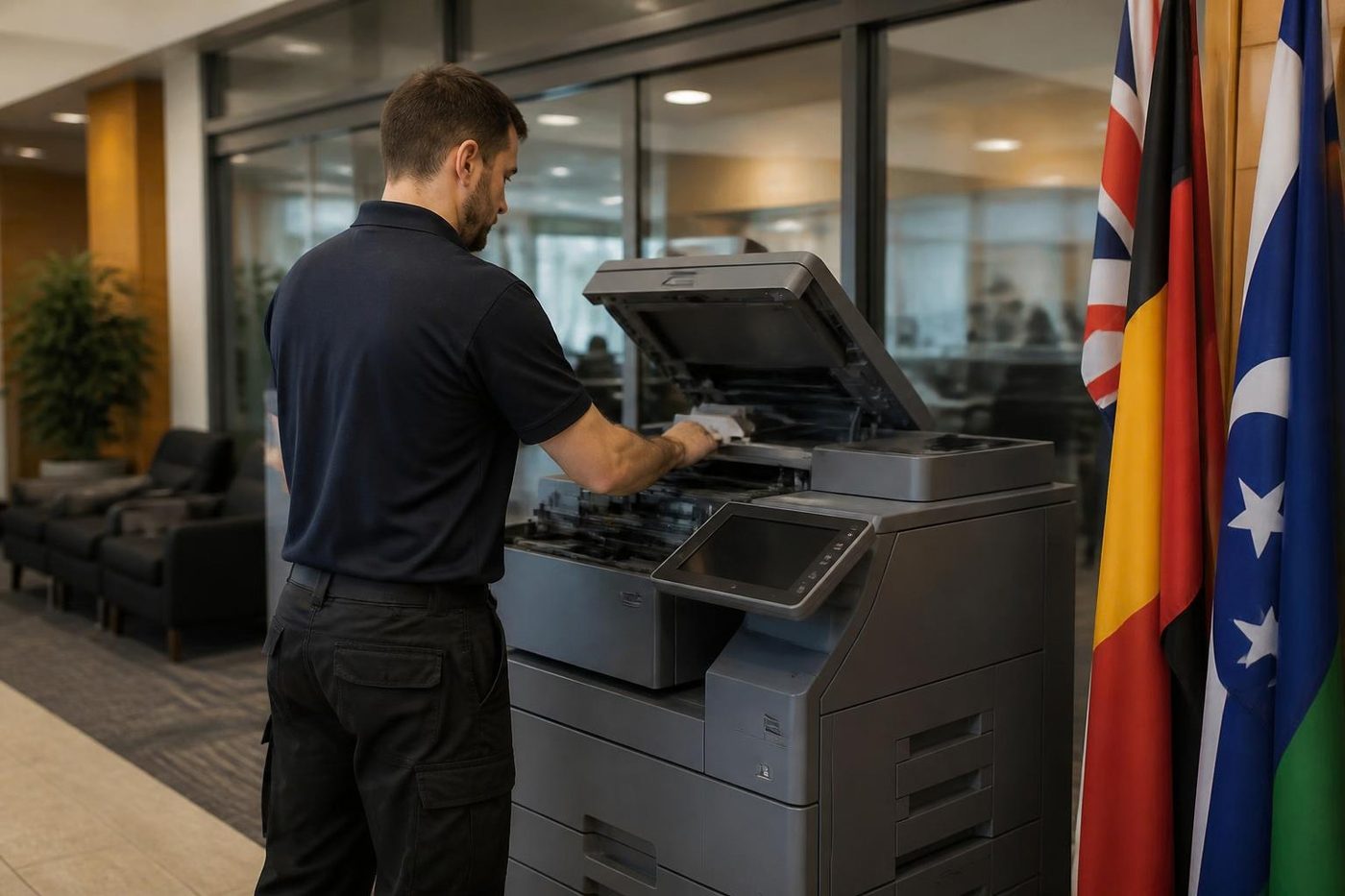 Copier and printer faultsStart from the symptom, find the next step.Toshiba e-STUDIO error codesCall for Service and a C code on a Toshiba, read plainly.HP LaserJet error messagesHP LaserJet 49, 50, 59 and 79 families explained.
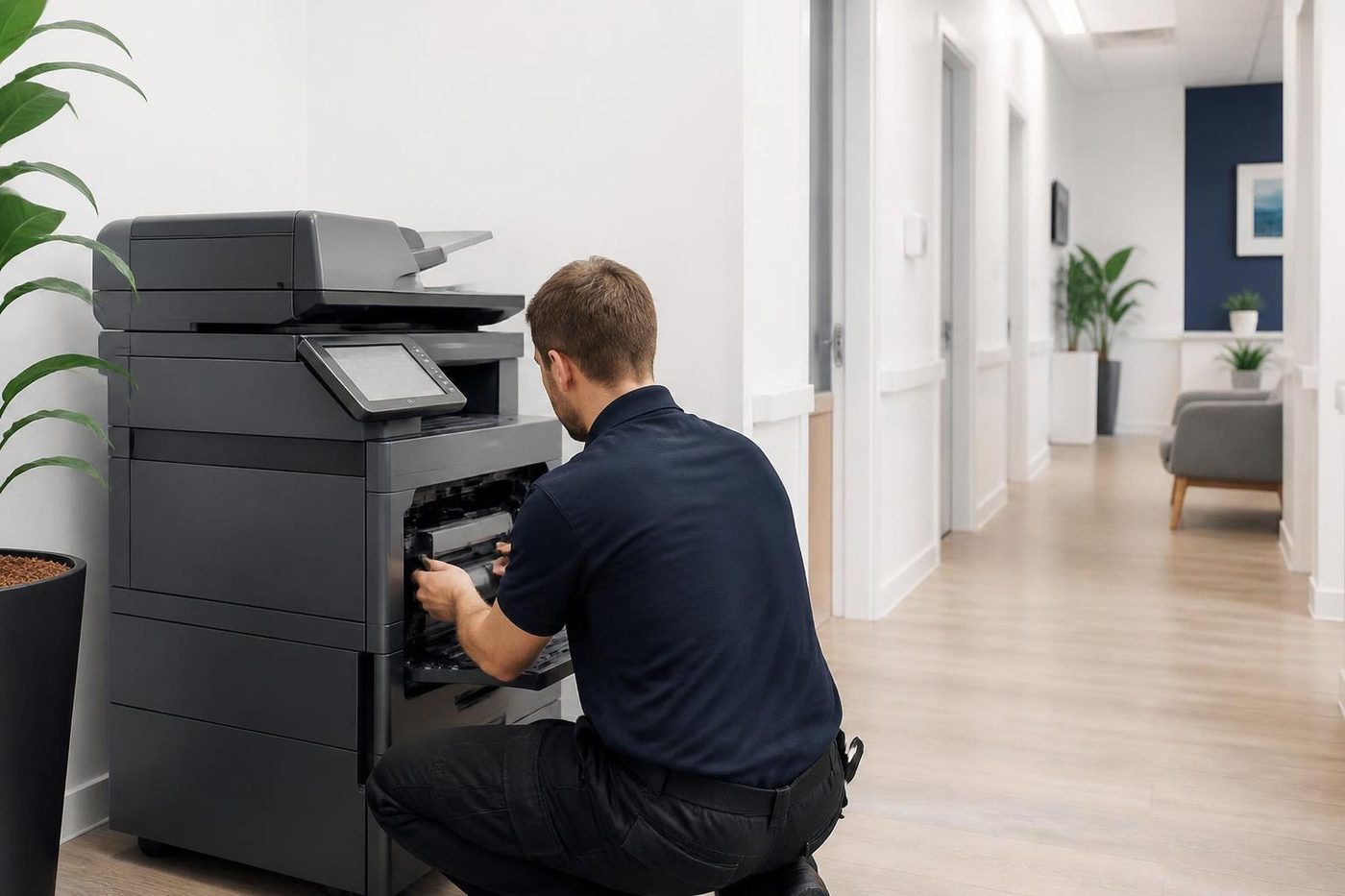 Kyocera TASKalfa error codesCall service and a C code like C6000 on a TASKalfa.
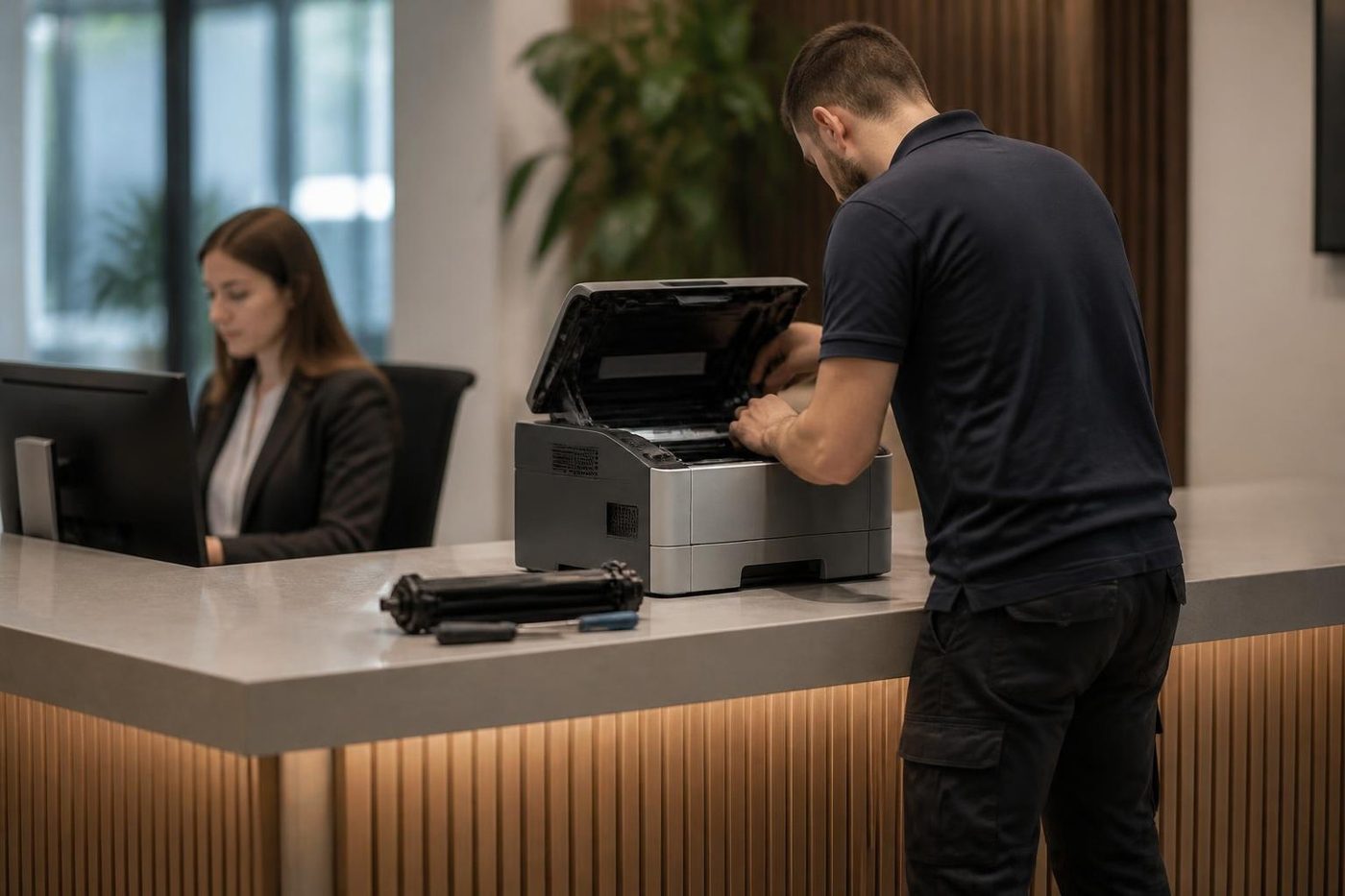 Commercial printer repairsCommercial laser printers, label printers and fleets repaired on site.
Buy, sell and lease
Buy, sell and lease commercial copiers on the Sunshine Coast
We also sell new and second hand commercial copiers and buy used ones. Same team, same technicians.
Offices, surgeries and site sheds

What people ask when they ring
What does Call service on a copier mean?
It means the machine has found a fault it will not work around and wants a technician. The code shown alongside points toward an area of the machine.
Can I look up my copier error code online?
You can, though identical numbers carry different meanings across makes and models. A hit on the number alone is a hint and not an answer.
Will restarting the copier clear the code?
Sometimes, especially after a power dip. Restart once. If the code returns, ring us and leave the machine off.
Why does the code appear the minute I switch on?
A code straight away often points at a sensor, a connector or a part that is not seated. A code after a minute of warm up more often means a part is not heating.
Does a maintenance message mean something is broken?
No, it is a reminder tied to a page count. Putting it off for long can turn the next visit into a repair, so book a service when it appears.
Which makes do you repair?
Most commercial makes and models. Toshiba and Kyocera are where we are strongest, and HP, Ricoh, Canon, Konica Minolta and others are covered too.
What do I need when I phone?
The model, the code as shown, when it appears, and what the machine was up to at the time. A photo of the panel helps.